
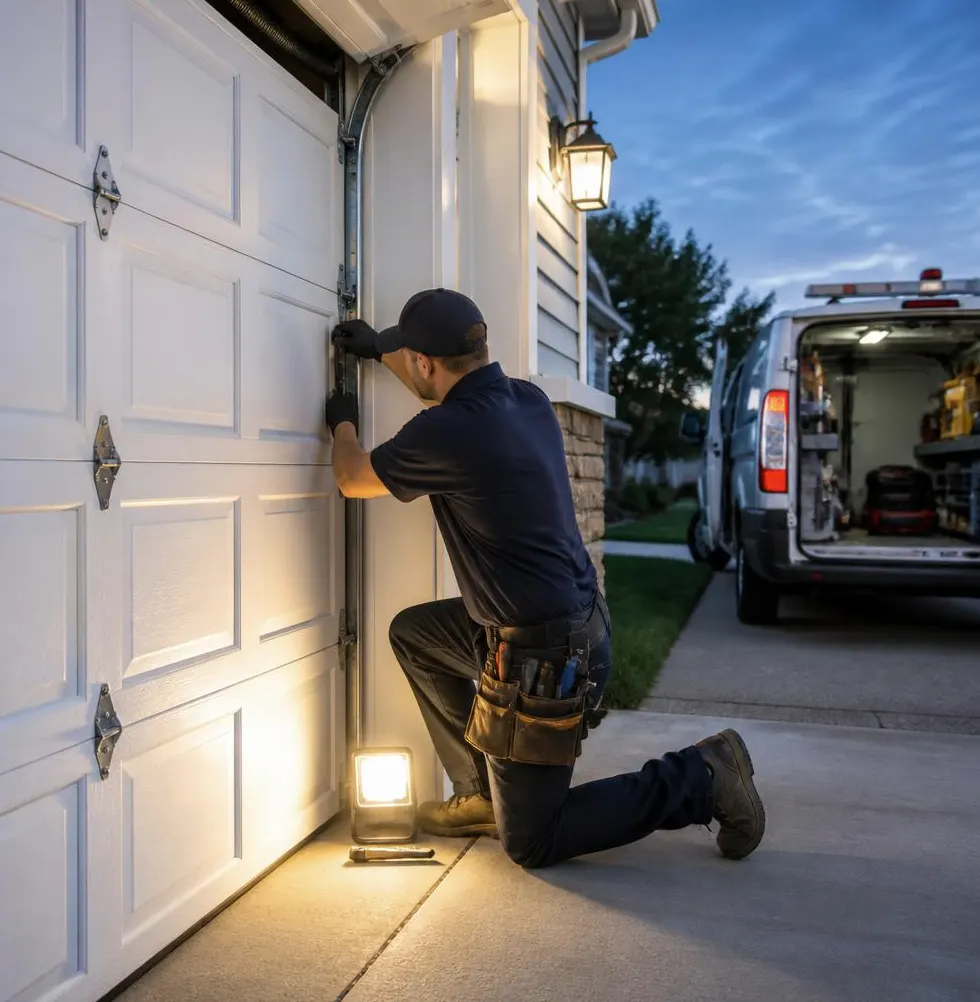
Short answer: your garage door is the biggest, weakest opening in your home's envelope
A standard double garage door is 16 feet wide and 7 feet tall — by far the largest moving panel in a house. When wind hits a home, pressure builds against every wall, but most walls are solid and braced with studs, sheathing, and fasteners every 16 inches. A garage door is a thin panel hung on a track, held by rollers and hinges, and connected to the house at only a few points. In a strong nor'easter, that combination of surface area and limited bracing makes it the piece most likely to buckle, bow, or blow in — and once it fails, wind pressure can get under the roofline and cause much bigger damage.
Why this matters more here than in other seasons
Late fall and winter in this part of New Jersey bring nor'easters with sustained winds and sharp gusts, often combined with heavy, wind-driven rain or early snow. A lot of the housing stock in Ridgefield Park and the surrounding towns still has original garage doors — sometimes decades old — that were never rated for today's wind-load standards and have had years of exposure to freeze-thaw cycles, road salt, and humidity. Thinner steel, worn seals, and loosened hardware all reduce how much pressure a door can take before something gives.
What actually fails first
- Track brackets pulled loose from the frame by repeated flexing in gusty wind
- Hinges and rollers worn from years of freeze-thaw expansion and contraction
- Panel seams on older steel or wood doors that have started to separate or rust at the bottom corners
- Weatherstripping that's cracked or missing, letting wind-driven rain push directly against the panel and track
- Springs that are already fatigued, so the door loses tension right when it needs to hold steady against pressure
A real pre-storm inspection checklist
This isn't a five-minute glance. Walk the door through each step with the opener disconnected (pull the red release cord) so you can move it by hand and feel where it binds or wobbles.
- Check the track alignment. Stand back and sight down each track. Gaps, bends, or spots where the track pulls away from the wall bracket are early failure points — they get worse under wind load, not better.
- Test every hinge and roller by hand. Grip the door at a panel seam and gently rock it. Excess play means worn hinges or rollers that won't hold the panel flat when wind pushes against it.
- Inspect the bottom seal and side weatherstripping. If it's brittle, cracked, or pulling away from the track, water and air are already getting past it — replace it before storm season, not after.
- Look at the lift springs. Visible gaps in the coils, rust pitting, or a door that feels heavier than usual when moved by hand are signs the springs are near the end of their life. A spring that lets go during a storm leaves the door essentially unsupported.
- Tighten all hardware. Track bolts, hinge screws, and the brackets that anchor the track to the frame all loosen gradually from vibration and temperature swings. A ratchet and 20 minutes catches most of this.
- Check the opener's force settings and reversal. If the opener struggles or reverses unexpectedly on a calm day, it will struggle more under wind pressure.
Bracing options worth knowing about
For older doors that aren't going to be replaced this year, horizontal or vertical bracing kits can be added to the inside of the panels to stiffen them against wind pressure — this is a lower-cost way to buy some protection without a full replacement. For doors that are already showing rust, warping, or repeated hardware failures, replacement with a door rated for higher wind pressure is the more durable fix, especially since older original doors in this area were installed well before current wind-resistance expectations existed. National pricing for wind-rated garage door upgrades typically runs in the $1,200–$3,500 range depending on size, material, and insulation, though the right number depends on the specific door and opening.
Don't ignore the opener and the slab underneath
A door can be structurally sound and still fail if the opener's motor mount is loose or the auto-reverse sensors are misaligned — both get jostled by seasonal temperature swings. Also check where the track mounts to the garage ceiling joists; in older homes this bracing was sometimes minimal to begin with and may have loosened over the years.
When to call Ridgefield Park Garage Door
If you find play in the hinges, a track pulling away from the frame, a spring that looks fatigued, or weatherstripping that's past saving, get it addressed before the next storm system moves through, not during it. Ridgefield Park Garage Door handles garage door maintenance visits that catch exactly these issues — tightening hardware, realigning tracks, replacing worn seals — and spring replacement when a spring is too far gone to trust through a windy winter. If a door fails unexpectedly during a nor'easter, their emergency garage door service covers that too.
If your garage door is original to the house, hasn't been serviced in years, or you just want it checked before the next round of storms, call Ridgefield Park Garage Door — proudly serving Ridgefield Park, Hackensack, Teaneck, Bogota, Ridgefield, Palisades Park, Little Ferry, and Garfield.